Also known as:
Blue-cheeked Parrot, Dufresne's Amazon or Parrot
Also known as:
Blue-cheeked Parrot, Dufresne's Amazon or Parrot

Amazona

dufresniana
Size:
34 cm (13.3 in)
Weight:
480-600 g (16.8-21 oz)
Subspecies including nominate:
one
Colour Adult:
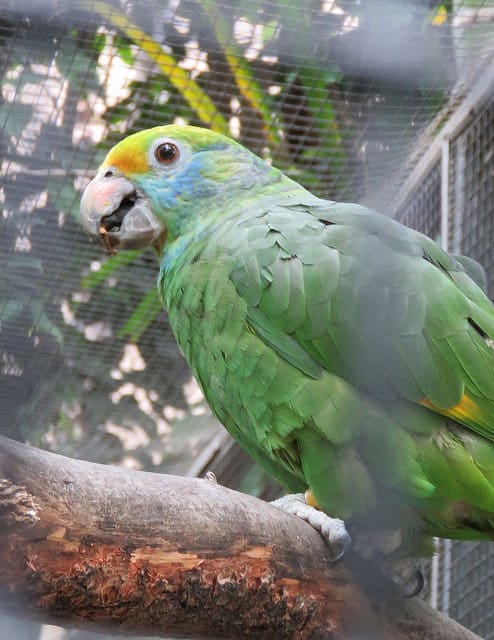
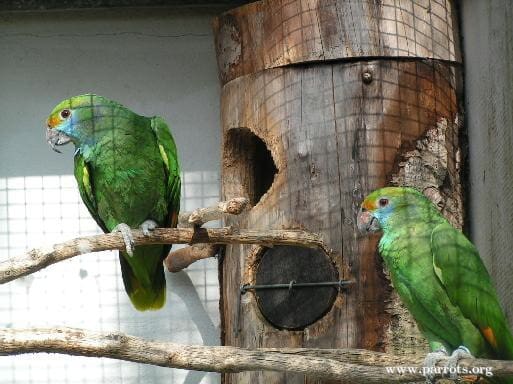
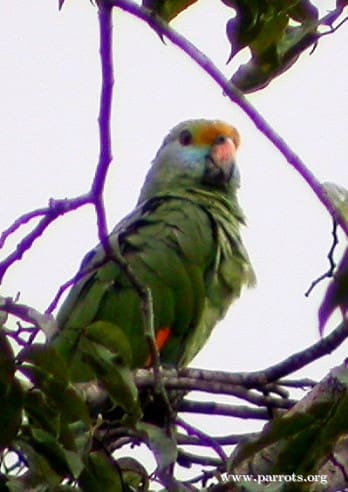
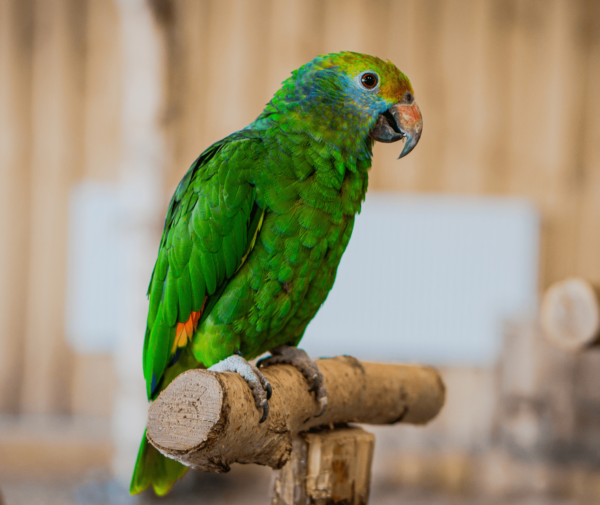
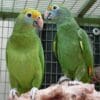
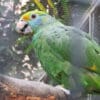
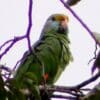
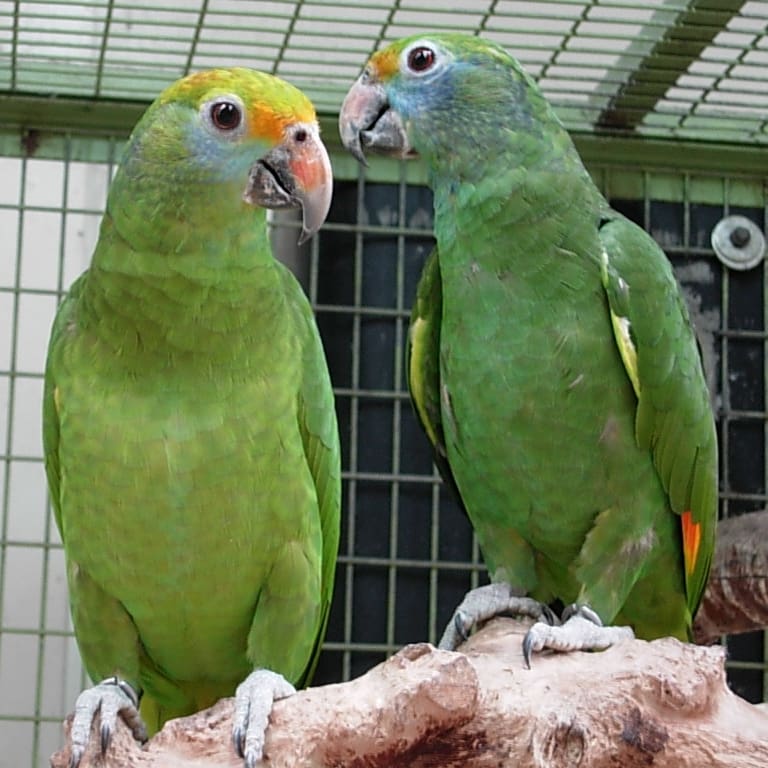
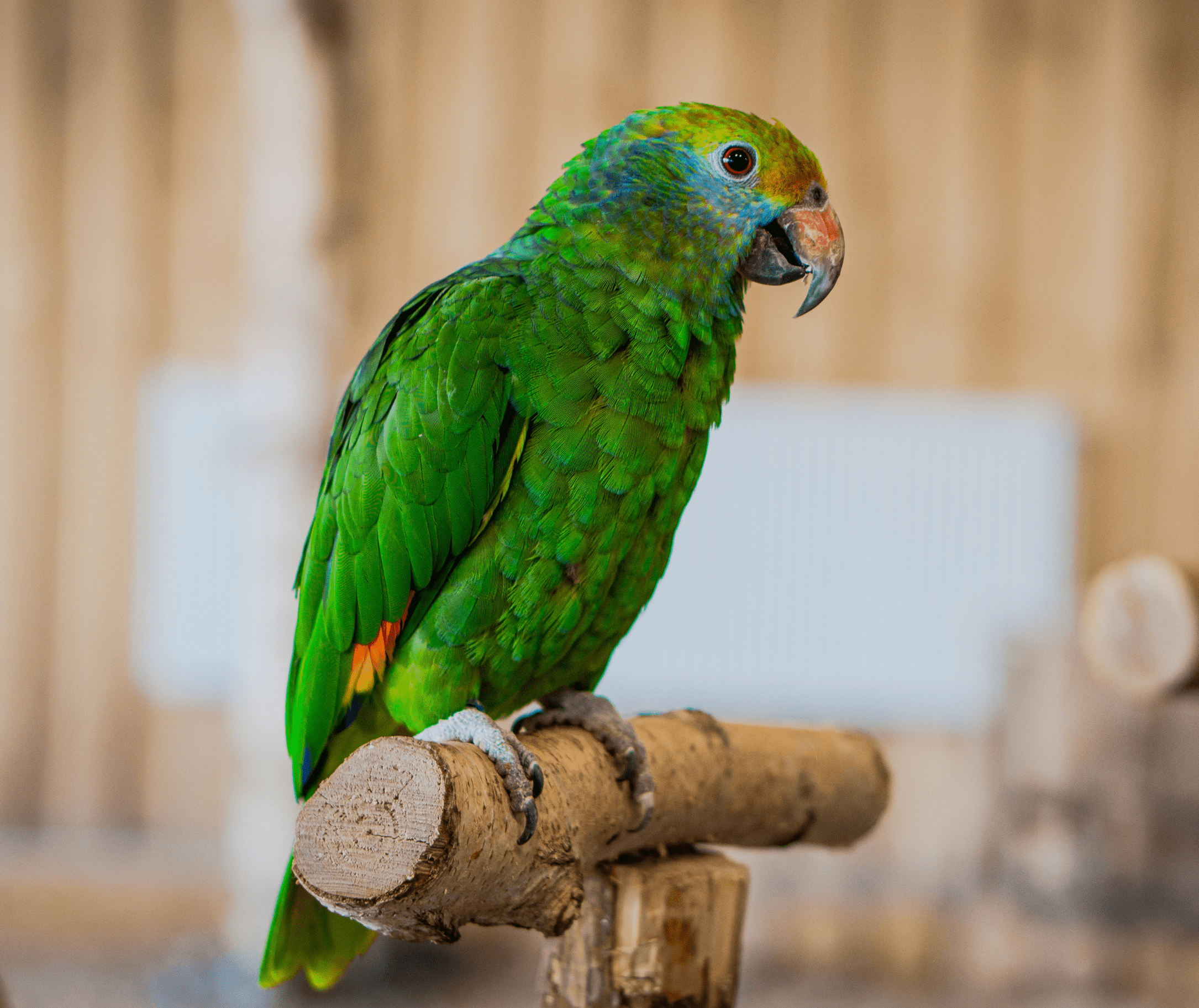
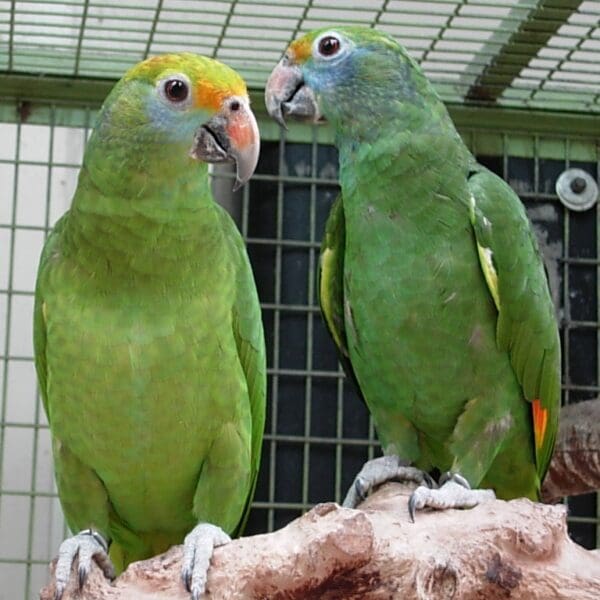
Both adults green body, feathers of neck to mantle scalloped dusky black; forehead and lores orange/yellow; feathers of crown and occiput yellow, widely edged dull green; forecheeks to under eye bright blue; lower cheeks to ear coverts violet/blue; carpal edge green/yellow; secondary feathers 1 to 5 bright yellow, the remainder green. Tail green, the side feathers widely tipped yellow/green, and faint orange marking on inner webs of four outer feathers. Beak grey with pink/red at base of upper mandible. Eye ring grey, eye orange/red.
Colour Juvenile:
As in adults but duller; forehead and lores dull yellow; crown and occiput green; lower cheeks to ear coverts green, slightly washed blue; less yellow on outer secondary feathers. Beak pale pink tinged grey. Eye ring grey/white, eye brown.
Call:
Trilling call cheeet cheeeet cheeet followed by whistle.
More Information:
Content Sources:
CITES
BirdLife International
Cornell Lab of Ornithology/Birds of the World
Parrots: A Guide to Parrots of the World, Juniper and Parr, 1998
Parrots: Status Survey and Conservation Plan 2000-2004, Snyder, McGowan, Gilardi and Grajal, 2000.
Parrots of the World, Forshaw and Cooper, 1977, 1989. 2010 edition
Parrots of the World, Forshaw, 2006.
Parrots in Aviculture, Low, 1992.
Captive Status:
Very rare.
Longevity:
—
Housing:
Walk-in aviary or enclosure, minimum length 4.5 m (14.7 ft) or aviary or suspended cage, minimum length 3 m (9.8 ft).
Diet:
Fruit such as: apple, pear, orange, cactus fruits, pomegranate, banana, etc, forming about 30% of diet; vegetables such as: carrot, celery, green peas and beans, fresh corn; green leaves such as: Swiss chard, lettuce, dandelion, sowthistle, chickweed; spray millet; mix of small seeds: canary, millet, smaller amounts of oats, buckwheat, safflower; limited sunflower seed; cooked beans and pulses, and complete pellet.
Enrichment:
—
Nest Box Size:
—
Clutch Size:
3 eggs
Fledging Age:
Likely 8-10 weeks.
Hatch Weight:
—
Peak Weight:
—
Weaning Weight:
—
World Population:
6000-61,000 mature individuals, decreasing.
IUCN Red List Status:
Near Threatened
CITES Listing:
Appendix II
Threat Summary:
Is considered to be fairly common in Venezuela, but the country constitutes only a small portion of its range. Across the rest of its range the species is generally uncommon. Suspected to be declining significantly from habitat loss. Also some threat from trade.
Range:
Occurs from extreme eastern Venezuela in Bolívar east through Guyana and Suriname to French Guiana. There is an undocumented record from Amapá, Brazil, and records from Brazil in northern Pará near Trombetas, about 420 km south of southern Guyana.
Habitat:
Found up to 1700 m (5576 ft). Occurs in rainforest and cloudforest in the lower subtropical zone, and in savanna woodlands in Venezuela. French Guiana birds are found in gallery forest.
Wild Diet:
Diet is poorly known; presumably fruits, seeds and flowers.
Ecology and Behaviour:
Habits not well known; probably resident with seasonal movements. Said to visit coastal forests in July-August. Found in pairs or small flocks with larger groups at communal roost at night. Keeps mainly to canopy.
Clutch and Egg Size:
Not recorded.
Breeding Season:
March, Guyana.